-
-

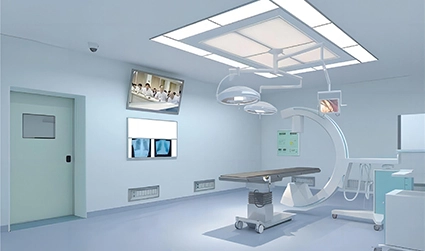
Modern operating rooms rely on more than surgical equipment alone. Lighting systems, environmental controls, medical devices, communication systems, and room status monitoring all need to work together to support efficient clinical workflows. An operating room control panel provides a centralized interface that helps medical teams manage these functions more effectively.
For hospitals, medical contractors, and operating theatre designers, selecting the right system requires careful consideration of usability, connectivity, specifications, and future expansion. Effective ot control panel design should focus on how healthcare professionals interact with the room rather than simply adding more functions.
A well-planned operation control panel can simplify daily operations by integrating multiple controls into one interface, improving coordination, reducing unnecessary movement, and supporting a more organized surgical environment.
An operating room control panel is a centralized system designed to manage and monitor important functions within a surgical environment. Instead of controlling different systems through separate switches and interfaces, medical staff can access key room functions from one location.
The primary purpose of an operation theatre control panel is to improve workflow efficiency by connecting different operating room elements, including lighting, HVAC systems, equipment status monitoring, communication functions, and environmental adjustments.
In traditional operating rooms, multiple independent controls can make it difficult for staff to quickly check room conditions or make adjustments. A centralized operation control panel helps simplify these tasks by providing a clear interface for monitoring and operation.
Typical functions include:
Lighting control for surgical and ambient lighting systems
HVAC and environmental condition management
Medical equipment status monitoring
Communication and interface management
Room condition adjustment and workflow support
A modern operating room control panel should be designed around the needs of surgeons, nurses, and technical staff. The goal is not only automation but also creating a smoother interaction between people and the operating environment.

Effective ot control panel design requires understanding the functions that directly influence operating room performance. A suitable system should combine essential controls while allowing future upgrades as hospital requirements change.
Lighting is one of the most frequently adjusted functions in an operating room. A control panel should allow users to manage surgical lighting, general illumination, and different lighting scenarios according to procedure requirements.
Temperature, humidity, and airflow conditions are critical in operating environments. Integration with HVAC systems allows staff to monitor and adjust environmental conditions more efficiently.
An advanced operation control panel can display the status of connected medical equipment, helping staff understand room conditions without checking multiple devices separately.
A touchscreen interface improves usability by providing an intuitive method for controlling different functions. Clear layouts and responsive operation are important for busy surgical environments.
Modern operating rooms often require network connectivity for communication, monitoring, and system integration. Features such as Wi-Fi and RJ45 connectivity support flexible installation and data communication.
The control system should allow quick adjustment of relevant room conditions based on surgical requirements and workflow changes.
Healthcare technology continues to develop. A good ot control panel design should provide flexibility for future system expansion rather than being limited to current needs.
The most effective designs are those that balance functionality, simplicity, and long-term adaptability.
Technical specifications play an important role when selecting an operating room control panel. Buyers should evaluate screen performance, operating system, connectivity options, and installation requirements before making a decision.
Important specifications may include:
LCD touchscreen display
220VAC / 50Hz power supply
1920 × 1080 resolution
DDR16G memory with optional DDR32G
Android 7.1 operating system
Wi-Fi and RJ45 connectivity
27-inch and 32-inch screen options
These specifications influence both user experience and system compatibility. A high-resolution touchscreen provides clearer information display, while network connectivity enables communication with other hospital systems.
Feixia OT Control Panel solutions offer different configurations for operating room applications, including various screen sizes and installation options. The design can be adapted according to project requirements, supporting different modular operating room layouts.
When evaluating an operation theatre control panel, hospitals should also consider maintenance accessibility and future upgrades. A system that is easy to manage can provide better long-term value.
Screen size is an important consideration in ot control panel design because it affects visibility, interface space, and installation requirements. The choice between a 27-inch and 32-inch model depends on the room layout and workflow complexity.
| Specification | 27-Inch | 32-Inch |
|---|---|---|
| Screen size | 27" | 32" |
| Resolution | 1920 × 1080 | 1920 × 1080 |
| Standard depth | 250 mm | 250 mm |
| With writing table | Available | Available |
| Best suited for | Compact control areas | Larger interfaces/workflows |
The 27-inch configuration is suitable for operating rooms where installation space is limited but centralized control is still required. According to current configurations, the standard size can be W871 × H617 × D250 mm.
The 32-inch option provides a larger display area for more complex interfaces and applications requiring additional information visibility. The standard dimension can reach W1121 × H756 × D250 mm.
Models with writing tables provide additional workspace for documentation or operational tasks. The selection should be based on room design, user habits, and the amount of information displayed.
An operation control panel improves operating room efficiency by changing how staff interact with different systems. Instead of managing separate switches and devices, medical teams can use one centralized interface.
Before implementing a centralized control system, operating rooms may face challenges such as:
Multiple independent switches
Difficult status checking
Fragmented operation processes
After integrating an operating room control panel, hospitals can achieve:
Centralized interface management
Easier room status monitoring
Faster environmental adjustments
Better coordination between staff members
The value of an operation theatre control panel is not only technical capability but also workflow improvement. The system should be designed around actual user requirements, ensuring that surgeons and nurses can complete tasks efficiently.
A practical principle for ot control panel design is that the panel should be built around workflow rather than simply the number of available functions. A well-designed system reduces complexity instead of adding more operational steps.
Choosing the right operating room control panel requires evaluating multiple factors, including screen size, functions, networking capability, system integration, ergonomics, and maintenance requirements.
A successful ot control panel design should create a balance between advanced technology and practical usability. The ideal solution connects different operating room systems while allowing medical professionals to manage their environment more efficiently.
Feixia provides OT Control Panel solutions designed for modular operating rooms and healthcare facilities. With different display options, functional configurations, and integration possibilities, Feixia helps hospitals build smarter and more efficient operating environments.
Yes. An ot control panel can be configured according to different hospital layouts, functional requirements, screen sizes, and integration needs.
Network connectivity is not always mandatory, but features such as Wi-Fi and RJ45 can support communication, system integration, and future expansion.
A wall-mounted operating room control panel focuses on saving space and providing centralized control, while models with writing tables add a practical workspace for documentation or operational tasks.
Yes. Depending on system design and compatibility requirements, an OT control panel can integrate with existing hospital equipment and facility management systems.
The panel should be placed where medical staff can access it easily without interrupting surgical workflows. Location planning should consider visibility, user movement, and room layout.
Buyers should provide project details such as operating room layout, required functions, screen size preference, integration requirements, installation conditions, and customization needs.